Low-Cost Groundwater Quality Monitoring System
Solar-powered ESP32 sensing node for groundwater quality, field-deployed over LTE.
Overview
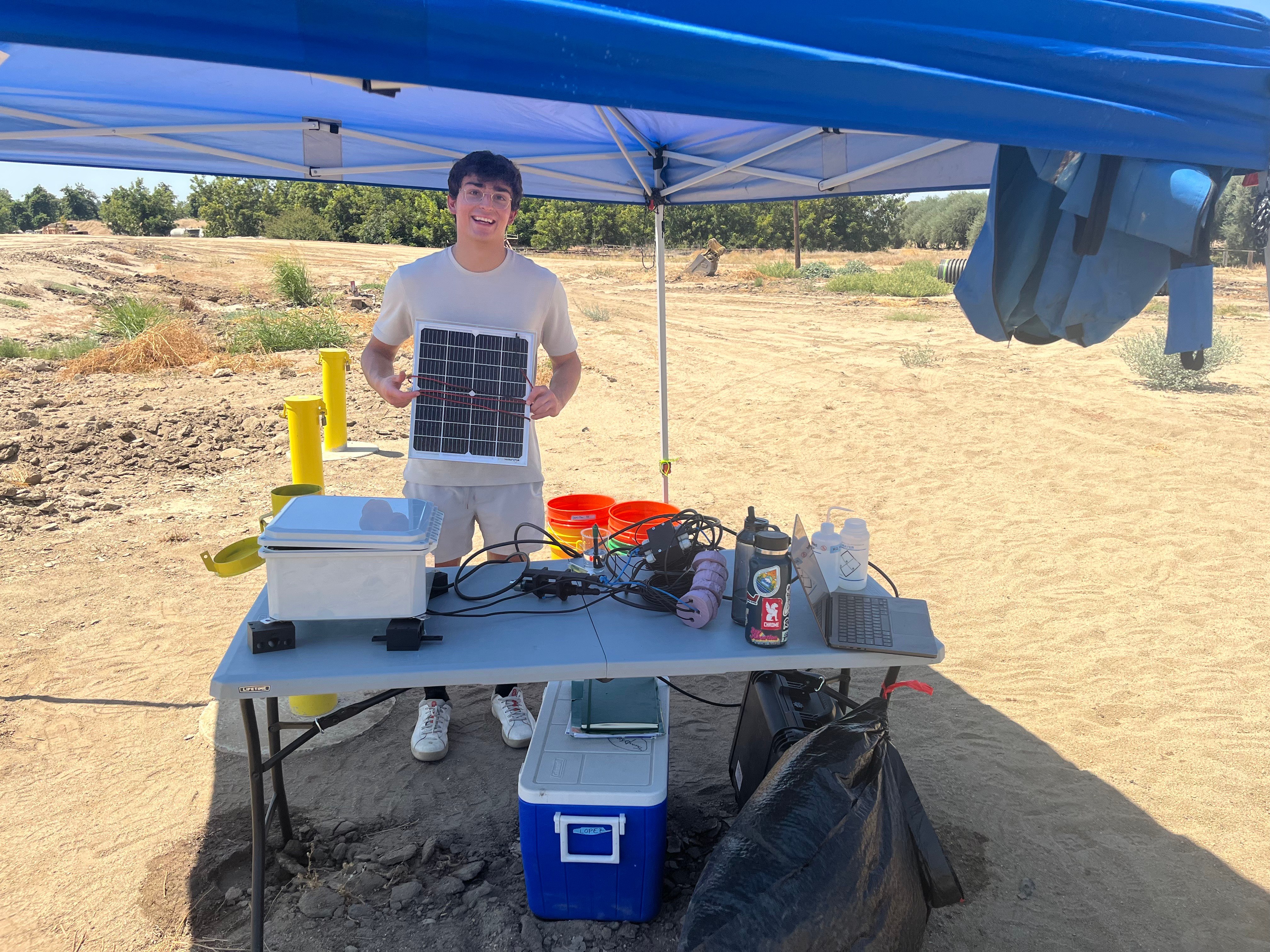
A 10-week Stanford EE research project for which I was the sole engineer. I took a groundwater monitoring node from an initial project brief through requirements, architecture, component selection, circuit integration, ESP32 firmware, sensor calibration, power characterization, mechanical packaging, debugging, and field deployment in a monitoring well in Madera County, California.
What I Built
- Adafruit Feather ESP32 V2 node coordinating four sensing domains and cellular telemetry
- pH and conductivity acquisition through Atlas Scientific EZO circuits over I²C
- Optical dissolved oxygen sensing over isolated Modbus/RS-485
- DS18B20 temperature sensing
- Blues Notecard LTE cellular telemetry for remote data delivery
- Solar panel + LiFePO4 battery power system with power-gated sensor domains and deep-sleep scheduling
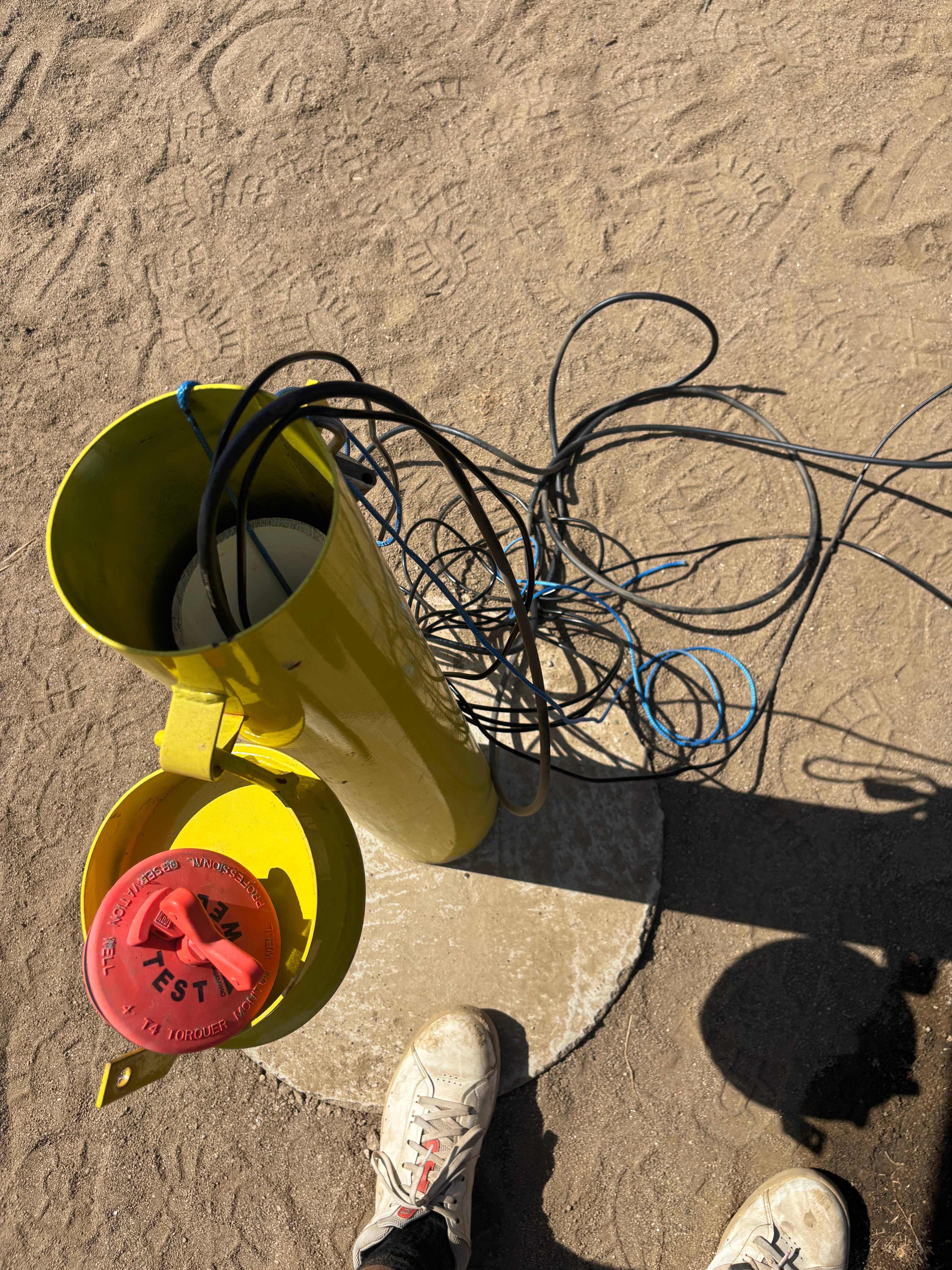
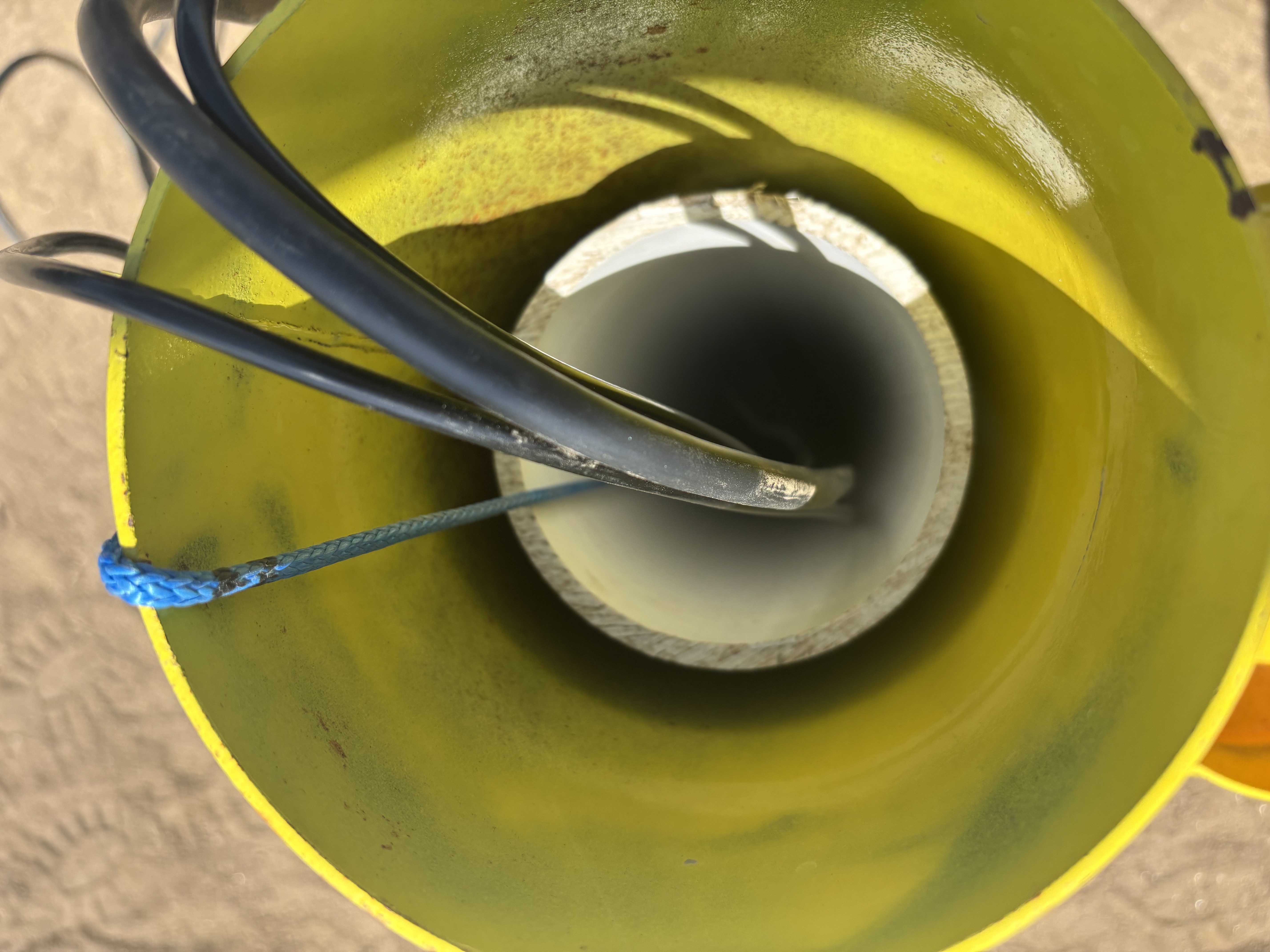
- Weatherized mechanical packaging sized for a 4-inch monitoring well
Technical Details
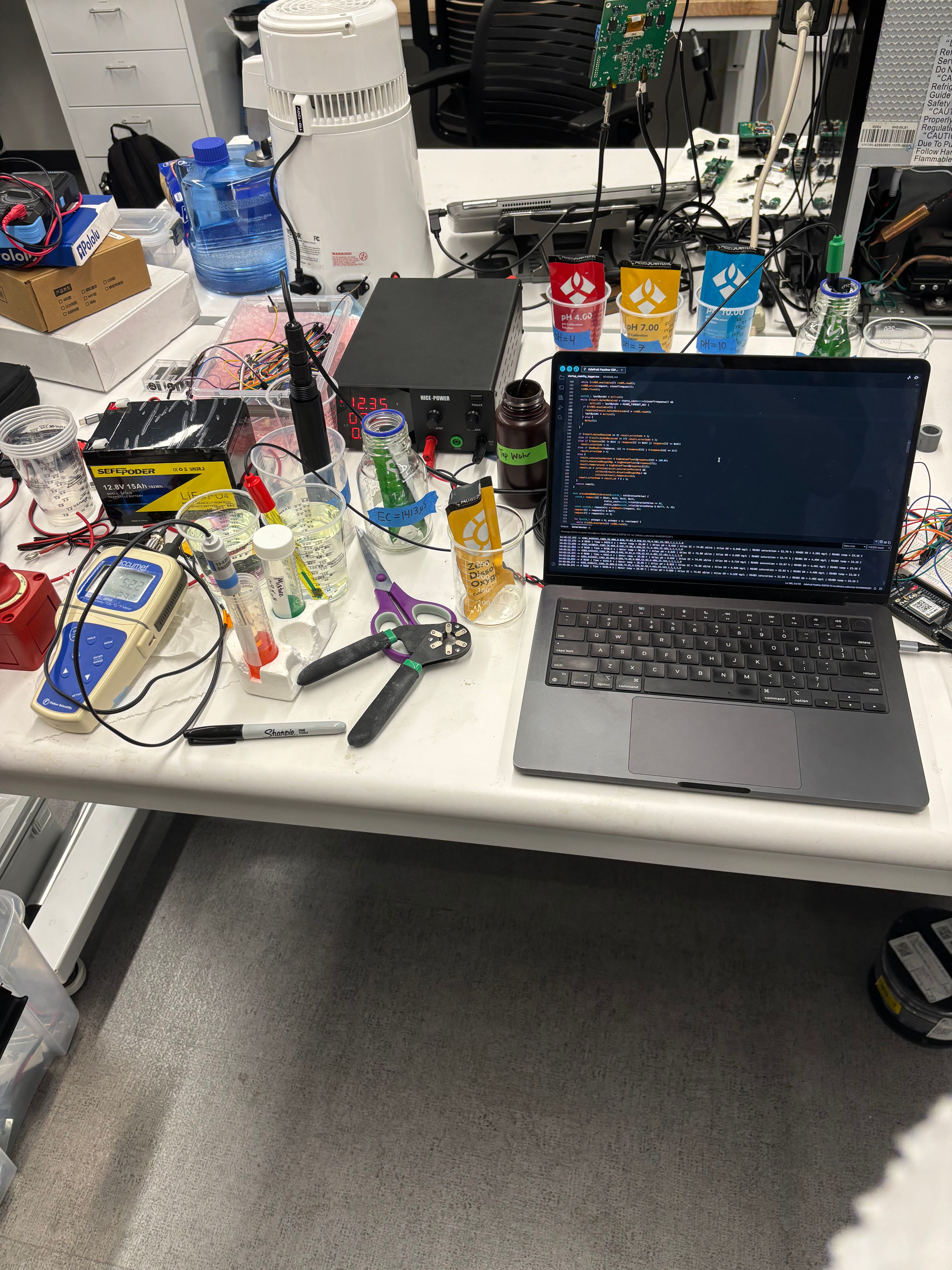
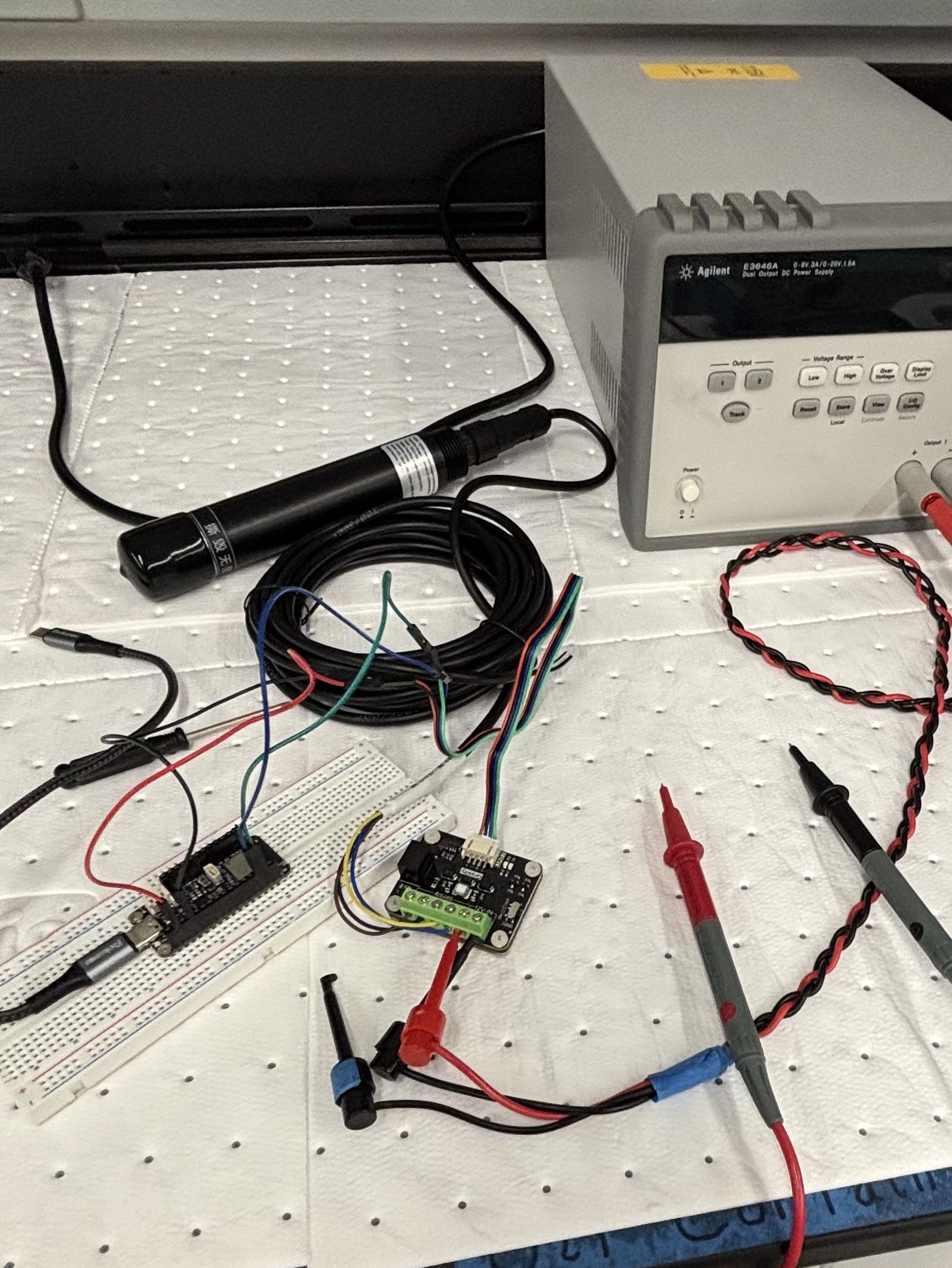
The ESP32 firmware sequenced multiple sensor protocols on one node: I²C for the Atlas Scientific EZO pH and conductivity circuits, an isolated Modbus/RS-485 link for the optical dissolved oxygen probe, and a one-wire DS18B20 for temperature. Each sensor domain was power-gated so it only drew current during its measurement window, and the node spent the rest of each cycle in deep sleep. Measurement cycles were packaged and pushed over LTE through a Blues Notecard. Power was budgeted against a solar panel and LiFePO4 battery, and consumption was characterized on a Joulescope JS220 to validate the runtime budget.
My Role
Sole engineer across the full stack: requirements, architecture, component selection, circuit integration, ESP32 firmware, sensor calibration, power characterization, mechanical packaging, debugging, and the field deployment itself.
Challenges and Debugging
- Sequencing three different sensor protocols (I²C, Modbus/RS-485, one-wire) reliably on a single ESP32
- Isolating the RS-485 dissolved oxygen link to avoid ground and noise issues
- Power-gating sensor domains and tuning deep-sleep scheduling to hit the energy budget
- Calibrating pH and conductivity against reference measurements
- Packaging the electronics for a 4-inch well and validating cellular delivery in the field
Build and Deployment
Results
- Field-deployed in a 4-inch monitoring well in Madera County, California
- 43/43 measurement cycles successfully delivered over LTE during deployment
- 1.088 Wh/day measured power consumption
- Projected 141-day battery-only runtime
- pH agreement within 0.051 units in validation
- Final node cost $1,179